
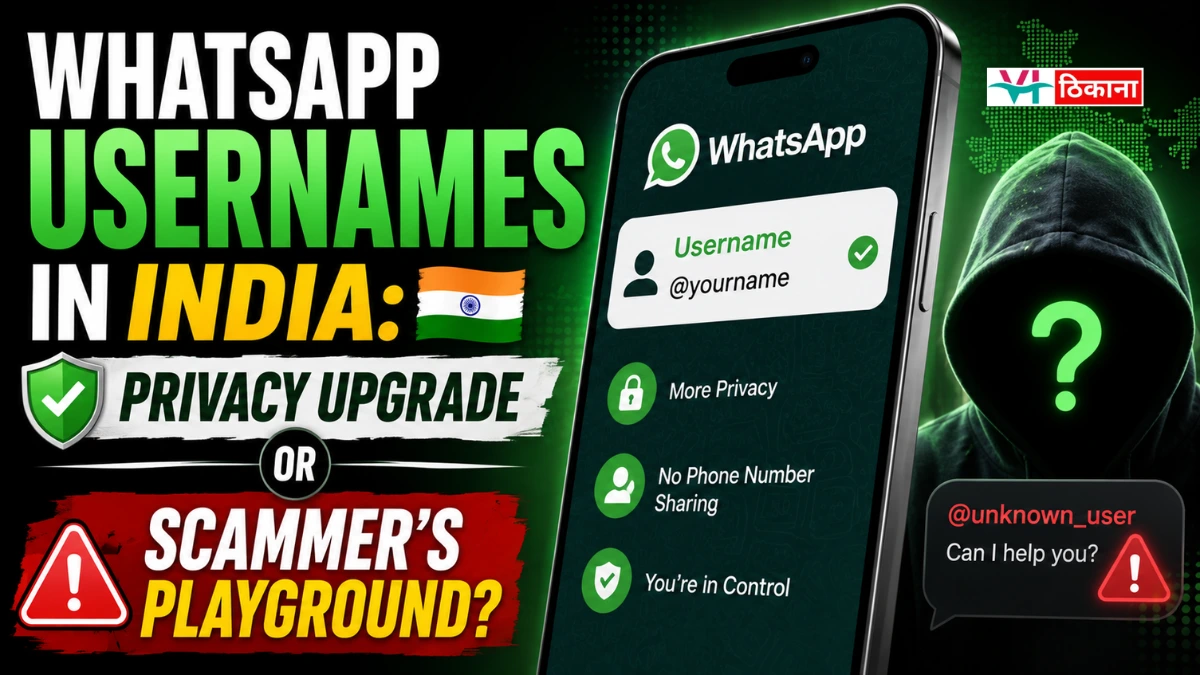
After years of relying exclusively on phone numbers, WhatsApp has announced one of its most significant privacy updates: usernames . The Meta-owned platform, which boasts over 3 billion users worldwide and an estimated 850 million in India, will soon allow users to connect using unique handles instead of sharing their mobile numbers .
The feature is designed as a “core privacy” tool, letting people participate in group chats, business conversations, and new connections without exposing their personal phone numbers . But in a country where WhatsApp is deeply woven into daily life—from payments to government services—the announcement has triggered fierce debate .
How WhatsApp Usernames Will Work
The Basics
Users can choose a unique username (3-35 characters, alphanumeric with periods and underscores) that sits on top of their phone number . A phone number is still required to create an account, and people who already have your number saved will continue to see it .
Key features:
-
Optional: You’re not required to create a username
-
Not searchable: Unlike social media, there’s no directory; people need your exact username to contact you
-
Username Key: An extra layer of protection requiring both a username and a key to initiate contact
-
Reservations open: Users can claim their preferred username early
Reserving a Username
Users can reserve a username by going to Settings > Account > Username . Existing Facebook and Instagram usernames are reserved for their owners, and high-profile names (public figures, celebrities, government entities) are protected from impersonation .
The Government’s Intervention
On July 1, 2026, India’s Ministry of Electronics and Information Technology sent a formal notice to Meta, directing the company not to roll out usernames in India until consultations are completed “to the satisfaction of the government” .
The government’s concerns:
| Risk | Explanation |
|---|---|
| Digital Arrest Scams | Criminals could impersonate police, CBI, or RBI officials more easily |
| Phishing & Fraud | Bad actors could solicit victims without revealing their phone numbers |
| Impersonation | Lookalike usernames could mimic government authorities, financial institutions, and public figures |
| Identity Spoofing | Removing visible phone numbers eliminates a key verification layer |
The government has demanded an explanation within three days and warned of potential action under the Information Technology Act, 2000, and the IT Rules, 2021 .
The Safeguards WhatsApp Has Built
WhatsApp has responded by detailing multiple protections built into the feature :
Pre-Launch Protections:
-
Reserved usernames and variations for public figures, celebrities, government entities, and verified Meta accounts
-
Existing Instagram and Facebook usernames held for their owners
Contact Controls:
-
No searchable directory—users need the exact username to initiate contact
-
Optional “username key” requiring both username and key to message
-
Limits on how many new accounts can be contacted
Detection Systems:
-
Automated systems to identify impersonation and abuse patterns
-
Information cards for first-time contacts (country, account age, shared groups)
-
Existing block and report tools remain available
Expert Opinions: The Debate Intensifies
Privacy Advocates
The Internet Freedom Foundation has criticized the government’s notice, arguing it has “no clear basis in law” . Cybersecurity experts argue usernames could actually reduce SIM swap fraud by making phone numbers a less attractive attack vector .
Scam Concerns
Public figures have raised alarm:
Ankur Warikoo (Entrepreneur): Warned scammers could create lookalike handles like “warikoo / awarikoo / ankurwarikooo / ankur_warikoo” and solicit money . He noted: “Cannot be verified through calling the phone number (because username = privacy)” .
Vijay Shekhar Sharma (Paytm Founder): Suggested verified usernames could be accompanied by numerous similar-looking, unverified alternatives .
Jasveer Singh (KnotDating Co-founder): Pointed to Telegram’s experience with username abuse as a cautionary tale .
Dhruv Rathee (YouTuber): Criticized Meta’s broader record on tackling scams, questioning their commitment to enforcement .
What This Means for Users
The feature could be useful for:
-
Freelancers and small business owners wanting to separate professional and personal communication without a second SIM
-
Participants in temporary groups (school, neighborhood, parent communities)
-
Anyone who wants to stay reachable without widely sharing their phone number
Adoption remains uncertain:
Experts note the feature’s success depends on whether people actually use it . Vikram Raichura of Helo.ai suggests adoption may begin in specific privacy-sensitive situations before broader acceptance .
The Path Forward
The government’s intervention has created an unusual standoff. While Signal and Telegram have offered usernames in India for years, WhatsApp’s massive user base makes this update uniquely consequential .
Whether usernames ultimately deliver greater privacy or create fresh opportunities for scammers may depend less on the feature itself than on how effectively Meta enforces its safeguards once the rollout proceeds . For now, WhatsApp has confirmed the feature is not yet live for messaging and will be introduced gradually later this year

नमस्कार दोस्तों, मेरा नाम विशाल कुमार है और मैं भारत का रहने वाला हूँ। मैंने 2022 में ब्लॉगिंग शुरू की। मुझे वित्त और व्यवसाय के बारे में लिखने या किसी को बताने का बहुत शौक है। अब मैं vidyathikana की मदद से आपको बिजनेस, फाइनेंस और कई अन्य चीजों से जुड़ी हर जानकारी बताने के लिए तैयार हूं। धन्यवाद